Future-proofing child and adolescent health in Europe and Central Asia: Presenting the WHO/UNICEF fact sheets as the evidence base for the upcoming strategy on child and adolescent health and well-being (2026–2030)
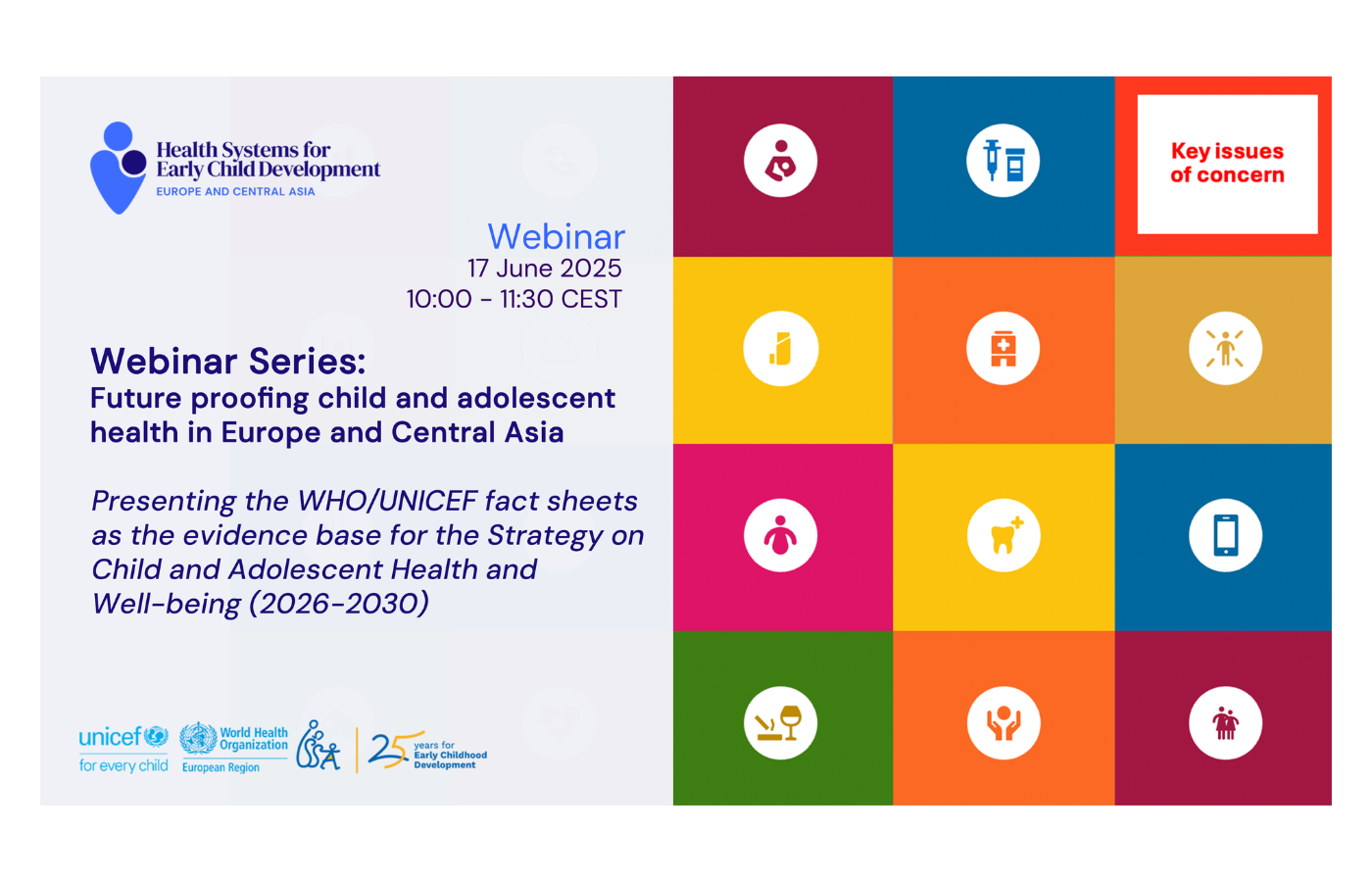
Join us for the first webinar in a new series on future-proofing child and adolescent health in Europe and Central Asia.
This three-part series supports the development of the upcoming Regional Strategy on Child and Adolescent Health and Well-being (2026–2030), led by WHO and UNICEF Europe and Central Asia, and grounded in the latest data and evidence.
Webinar 1: Key Findings from WHO/UNICEF Fact Sheets
Languages: The webinar will be presented in English with simultaneous interpretation in Russian. Other languages may be added based on interest and country support.
Why attend?
Adequate investments in child and adolescent health are critical for lifelong health, learning, and well-being. Yet across the region, children face increasingly complex challenges: stagnating newborn survival rates, declining immunization coverage, rising rates of overweight and obesity, and setbacks in access to essential services. These trends — worsened by the COVID-19 pandemic, climate change, and socio-economic inequalities — underscore the need for renewed, coordinated action.
This webinar will:
- Present key findings from new WHO/UNICEF fact sheets on child and adolescent health
- Explore implications for health systems, services, and policies supporting health and wellbeing of children and adolescents
- Open a regional dialogue to inform the forthcoming strategy
Topics will include:
Child and adolescent mortality, immunization gaps, breastfeeding, early childhood development, overweight and obesity, digital environments, adolescent mental health, providing health services to children and adolescents, sexual and reproductive health, and the impact of COVID-19 on education and services.
Guided by five core principles—early investment, duty of care, protection from commercial harm, multisectoral governance, and accountability—this webinar sets the stage for a strategic, evidence-informed response across the region.